This Black Friday is different. During last year’s holiday season, traffic to U.S. retail sites from generative AI tools rose 693% year over year, according to Adobe Analytics. This year, 29% of consumers plan to use AI in their holiday shopping, up from 22% last year, and 75% of them will use it to research products, per PwC’s 2026 holiday survey.
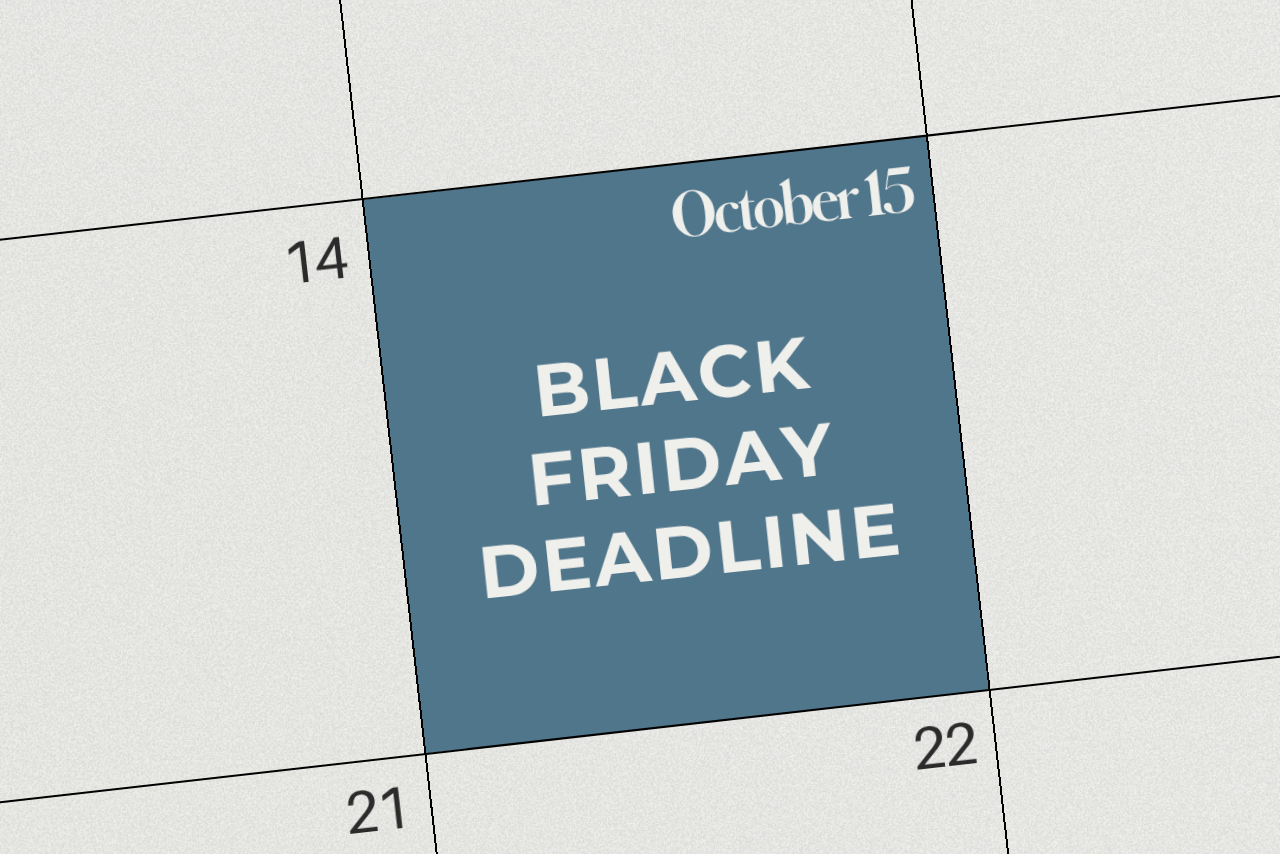
Gift research, the stage where a shopper decides what belongs on the list, now runs through search and AI tools as well as through editors, creators, and friends. For food, health, wellness, parenting, and lifestyle brands, that raises the value of syncing media, influencers, and promotions around one message. It also moves the first deadline. Black Friday is November 27 and Cyber Monday is November 30, but the deadline for earned media is October 15.
Why the Message Has to Match
Q4 planning has usually meant separate calendars for media, influencers, promotions, and performance marketing, each written by different people on different timelines for different purposes. The same product ends up described in subtly different ways.
That matters more this year because AI tools don’t take a brand’s word for it. They look for the same specific claim corroborated across independent sources. When an editor and a creator make the same point about a product within the same few weeks, that’s corroboration. When they make two different points, that’s two brands sharing one name.
Editors apply the same standard. We surveyed the ten editors attending CBC’s latest Culinary House before they arrived, and all ten responded, a response rate you rarely see on a media survey. Asked what makes a brand’s claims credible, seven of ten ranked independent third-party testing highest, and seven of ten ranked expert practitioners equally high. The brand’s own claims about itself ranked near the bottom. The second most common reason a brand gets cut from a story already in progress, after not fitting the angle, was that the product didn’t perform the way it was pitched.
Our read: a claim has to survive outside scrutiny before it’s worth repeating anywhere. If it can’t survive an editor’s skepticism, it won’t hold up as a consistent claim across sources in an influencer caption or an ad either.
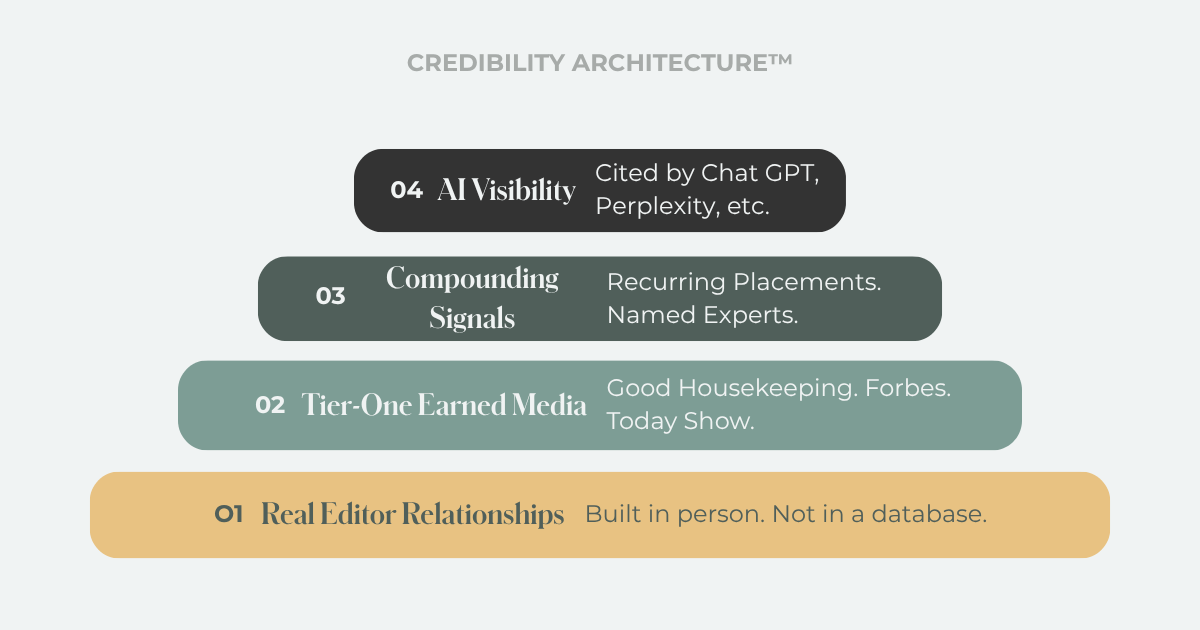
This is the core of what we call Credibility Architecture™: three to five core claims, proven once, stated in the same language everywhere they appear. Not a tagline. Not marketing copy. The actual, provable thing that’s true about the product, repeated on purpose across every channel instead of reinvented by each one.
The Math Behind October 15
A gift guide placement or product review doesn’t influence anyone the moment it publishes. It needs time to get indexed, get picked up by the search and AI systems shoppers use to research gifts, and get established as a source those systems treat as reliable. Our working rule is 4 to 6 weeks of runway before the buying window opens. The exact lag varies by outlet and by AI engine.
Count back six weeks from November 27 and you land on October 16. Round down, and October 15 becomes the working deadline. Media isn’t first in importance. It’s the piece with the least flexibility, so everything else builds around it.
Three Steps, One Message, Synced to the Nearest Deadline
Once the message is locked, the calendar works backward from Black Friday on November 27, starting with the channel that has the least lead time. Right now, that’s media.
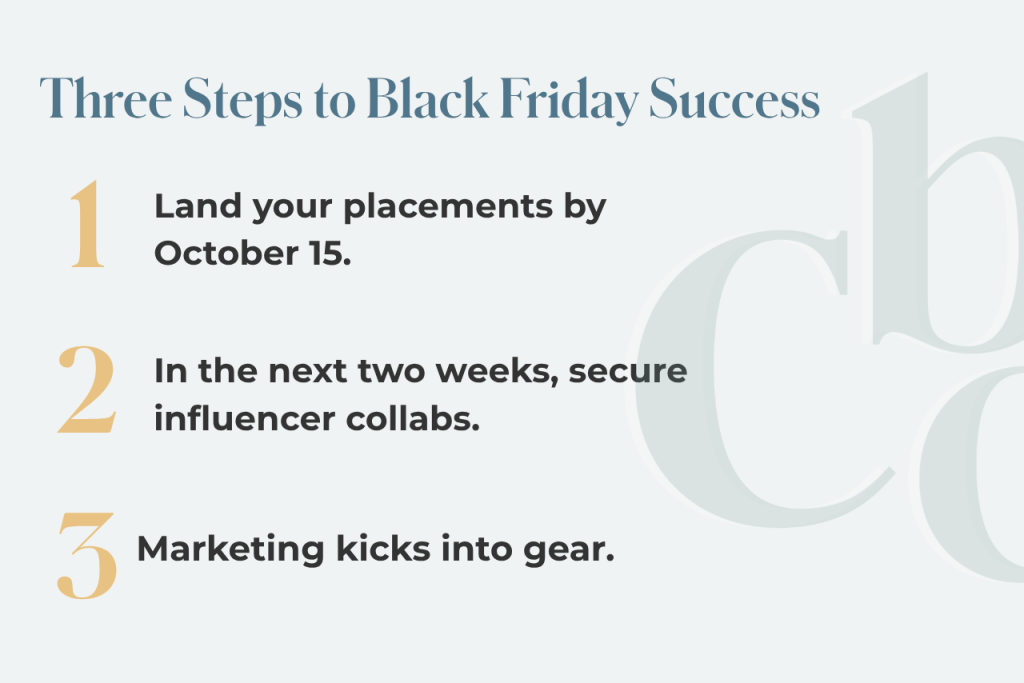
Media, in motion by October 15.
Editors publish on their own timelines, so what you control is readiness: pitches sent, samples and spokespeople available, and a claim with outside proof. The placement that results carries the core claim, in the language you’ve decided to defend everywhere. For a health or wellness brand, that’s the gift guide naming your product for a specific, provable use case. For a food brand, it’s the “best gifts for the home cook” roundup. For a parenting brand, the expert-vetted safety guide. The outlet varies by category. The claim inside it doesn’t.
Influencers next, October 16 to 31, echoing the claim, not inventing a new one.
Creator content that repeats the editor’s specific point within the same few weeks is corroboration. Creator content that makes its own point is a second story.
Promotions and performance marketing last, November 1 to 30, once the claim has been vetted publicly.
A discount lands harder after a product has been proven than it does cold. Retargeting and paid social should pull the same language the media placements and creator content already established, aimed at people who have seen it once or twice, not introducing the product from scratch in the last two weeks. Black Friday and Cyber Monday fall in this window.
A note on timing within timing: Amazon’s Prime Big Deal Days lands October 6-7 this year, inside the window where a fresh media push no longer has time to work. That calls for a narrower, separate plan built on the message that’s already been locked, not a new one.
Where to Start
Lock the three to five claims you can defend under outside scrutiny before you build the calendar. If your pitches are already out, the claims they carry are your message, so confirm each one has outside proof behind it. Then work backward from October 15, not forward from today. Gift guide pitching typically wraps up by late summer, so if yours haven’t gone out, the placements still in reach by October 15 are updates to existing online guides, product reviews, evergreen roundups, and expert-source inclusion. Each one needs a claim you’re confident would survive an editor’s questions. Media aimed at the December gift-buying window still has runway.
We built a short checklist that lays out the message-and-calendar sync window by window, working back from Black Friday. It’s available as a download.
About the Author

Len Cercone is the Founder and CEO of CerconeBrownCompany (CBC PR), a lifestyle consumer PR firm focused on food, health, wellness, clean beauty, and purpose-driven brands since 2001. CBC’s HOUSE Programs bring top consumer editors together with brand teams in curated, multi-day settings, building the real editorial relationships that drive both human and AI visibility. Len writes about the intersection of earned media, brand authority, and AI-driven discovery.
Connect on LinkedIn: linkedin.com/in/cercone