By Len Cercone, Founder and CEO, CerconeBrownCompany (CBC PR)
Eighty-nine percent of links cited by AI tools come from earned media. That single finding, from Muck Rack’s 2025 analysis of how language models build answers, should be the first thing every PR and marketing leader at a food, health, or wellness brand reads this year. Because the implications for how you run your communications program are significant — and most teams haven’t fully caught up to them yet.
This post explains what AI visibility actually is, how it works in practice for brands in your category, and what a PR program built to address it looks like. By the end, you’ll know how to run a quick audit of where your brand stands right now, and what the path forward looks like depending on what you find.
How AI Search Is Different From What Came Before
Google’s traditional search ranked individual pages. A great piece of coverage in Healthline or EatingWell earned a position in search results — the better the outlet and the more links pointing to it, the higher it ranked. That’s still part of how search works. But it’s no longer the whole picture.
ChatGPT, Perplexity, Google AI Overviews, and tools like them don’t return a ranked list of pages. They synthesize an answer — typically drawing from five to ten sources per response — and present it as a single, coherent reply. When someone asks “what’s the best probiotic for gut health” or “is collagen actually worth it,” the model pulls from multiple sources it considers credible, reconciles the information, and delivers something that sounds like it came from one authoritative voice.
The practical implication: appearing in AI answers requires a different kind of presence than appearing in a search results page. It requires consistency and corroboration across multiple independent sources, not just authority in one.
What Makes a Source Credible to an AI Model
Not all media coverage carries equal weight in AI answers. Understanding how models evaluate sources is what separates a PR program that builds AI visibility from one that doesn’t — even when both are generating good placements.
The factors that matter most: structured content with clear headings and expert attribution, open access (paywalled content is harder for models to retrieve), freshness (recent content is weighted more heavily), and corroboration — the same claim appearing across multiple independent sources.
That last factor is the one most programs underestimate. A claim that appears in one publication, however prestigious, is a single data point. The same claim appearing consistently across Healthline, EatingWell, a creator’s YouTube channel, and a brand’s own blog starts to look like consensus. Consensus is what becomes an AI answer.
A 2025 study by Outcomes Rocket analyzed 5,472 health citations across ChatGPT, Gemini, Claude, and Perplexity and found that AI platforms drew more heavily from consumer-facing health media than from peer-reviewed research: 59% versus 41%. The outlets that translate science into accessible, structured content for a consumer audience carry more weight in AI answers than the original research papers. The publications your publicists are pitching every day matter more than the journals your R&D team publishes in.
The Publications Most Likely to Move the Needle
For food, health, and wellness brands, the publications with the strongest AI citation pull share a set of characteristics: structured, expert-attributed content; open access; regular updates; and a track record of covering your category in depth.
In health media, that means Healthline, Verywell Health, WebMD, Harvard Health Publishing, and Medical News Today. These are the interpreters of science — the outlets consumers trust when they want to understand what research actually means for their daily choices, and the sources AI models have learned to treat as authoritative.
In food and nutrition media, it’s EatingWell, Bon Appétit, Serious Eats, Epicurious, and Food and Wine — publications that shape AI answers about ingredients, diets, cooking methods, and the “is this actually healthy?” questions that drive purchase decisions.
In wellness, Well+Good, MindBodyGreen, Prevention, Shape, and Health.com drive answers about supplements, functional wellness, emerging health categories, and lifestyle habits.
Beyond traditional media, a few platforms carry outsized influence that brands often overlook. YouTube captures roughly 39% of social platform citations in AI answers, according to one analysis — in-depth creator content that discusses your category genuinely and mentions your brand in context generates real signal. Reddit, particularly on Perplexity, functions as a “real-world experience” layer: community-vetted discussions about products and ingredients feed AI answers in ways that planted marketing content can’t replicate. And LinkedIn expert commentary, particularly from credentialed authors, shows up in AI citation patterns more than most brands expect.
This doesn’t mean you abandon your current media strategy. It means you add an AI visibility lens to the targeting decisions you’re already making.
Why One Great Placement Isn’t Enough
This is the part that surprises most brand teams: landing a strong placement in a top-tier outlet and earning a presence in AI answers are related, but they’re not the same thing.
Three dynamics explain the gap.
First, AI models build answers from consensus, not authority. The model doesn’t say “Healthline said it, so it must be true.” It says “Healthline said it, EatingWell said something consistent, and a nutritionist on YouTube made the same point — this is probably the right answer.” Your brand wins the AI answer when its message is corroborated across independent sources, not when it appears in one impressive outlet.
Second, inconsistent messaging actively works against you. If your Healthline placement frames your product as “clinically studied for gut health” and your EatingWell coverage frames it as “a trending ingredient in smoothie bowls,” the model sees two different narratives and may not confidently cite either one. The pitch angle can and should vary by outlet. The core claim shouldn’t.
Third, defaults compound — and absence compounds too. Once a model treats a brand as the reliable answer for a category question, that brand appears in more answers, generates more web mentions, and creates more signal for future training cycles. For brands that aren’t there yet, absence works the same way in reverse. The window to establish these positions isn’t permanent.
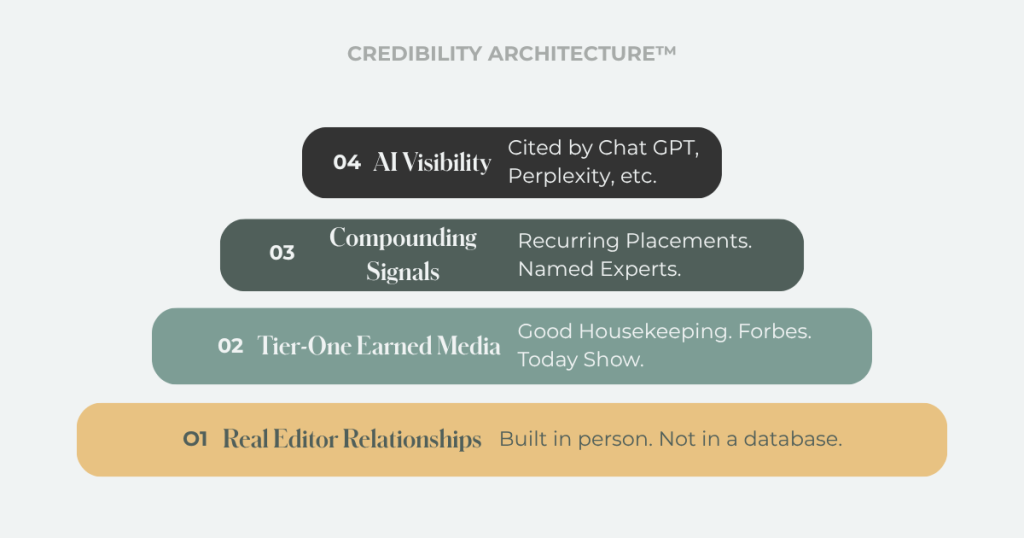
Credibility Architecture: What a Program Built for AI Visibility Looks Like
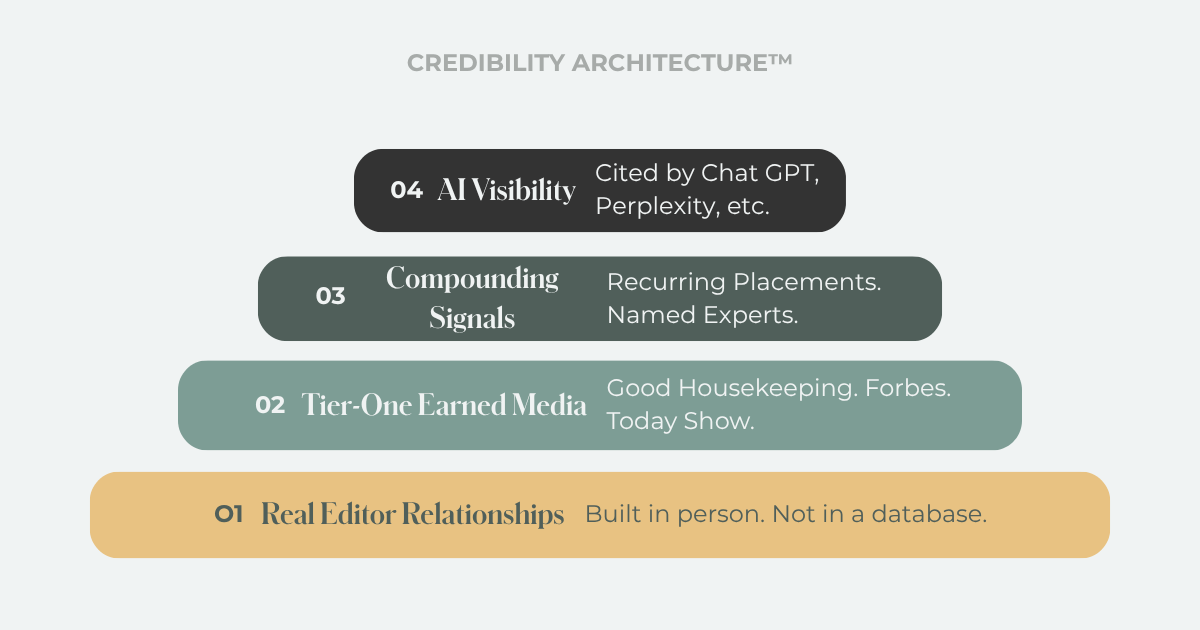
At CBC, we call the coordinated approach Credibility Architecture™. It’s not a separate initiative layered on top of your communications program — it’s a lens applied to the work most teams are already doing, across five lanes.

Media Relations. Build message architecture before any outreach goes out: three to five core claims, stated in the exact language you want to appear consistently across coverage, with the proof points and expert spokesperson to support them. The pitch angle flexes by outlet. The underlying language doesn’t. Every journalist gets the same expert, the same data, the same framing. This is what turns individual placements into corroborated AI signal.
Thought Leadership and SMEs. AI models track entities — including people. A registered dietitian, board-certified dermatologist, or PhD food scientist appearing consistently across media placements, LinkedIn, and creator content builds an authority signal the model learns to associate with your brand. Credentials matter more than title. A VP of Marketing cannot build the AI authority that a credentialed expert can, regardless of how smart the VP is. If your brand doesn’t have that expert on staff, formalizing an advisory relationship is worth the investment.
Creator and Influencer Programs. A ten-minute YouTube video where a nutritionist genuinely explores an ingredient and mentions your brand in expert context generates more AI-relevant signal than thirty seconds of sponsored content. Brief creators the way you’d brief a journalist: category context first, brand second. And coordinate timing with your earned media calendar — when a Healthline placement and a YouTube video land in the same window reinforcing the same narrative, the triangulation effect is at its strongest.
Company Content. Your website and blog are the one lane you control entirely. Build them to inform, not to sell. Lead every page with the answer to the question your customers are actually asking. Use FAQ formatting around real consumer queries. Name the expert who authored or reviewed the content. And match the language your earned placements use — consistency between owned and earned is itself a corroboration signal.
Measurement. Most brands don’t know where they stand in AI answers. We use RankScale.ai to track AI citation data across platforms and show brands exactly where they’re invisible. Run a quarterly AI audit: identify the fifteen to twenty questions your customers ask most about your category, ask them across ChatGPT, Perplexity, Google AI Overviews, and Claude, and document which brands appear, which publications are cited, and where you’re not showing up. That audit is the baseline. Without it, you’re optimizing blind.
The Role of Real Relationships
Here’s something worth naming directly: the publications AI engines cite most in food, health, and wellness are the exact outlets CBC publicists have been building real editorial relationships with for over twenty years.
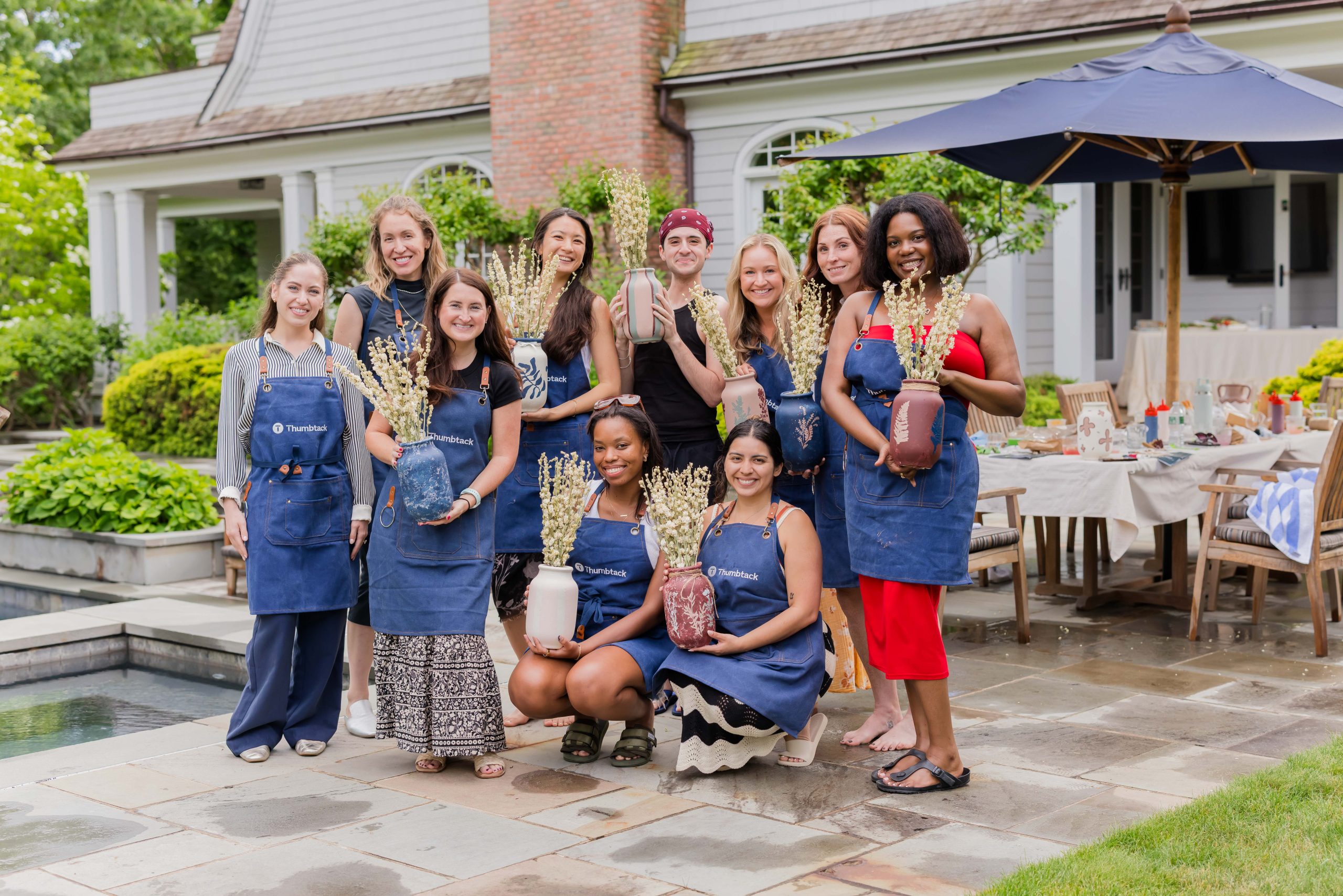
Four times a year, through our HOUSE Programs, we bring top consumer editors from these publications together with brand teams in multi-day settings — in Temecula, in Stowe, and elsewhere. The access those relationships provide doesn’t end when the house does. The editors who attend are the same ones writing for the outlets that form the backbone of AI authority in this space, all year.
We built these programs because meaningful relationships produce better coverage. It turns out that better coverage — in the right outlets, attributed to real experts, consistent in its messaging across multiple sources — is exactly what AI platforms treat as authoritative. The work hasn’t changed. The proof of its value just got significantly clearer.
Where to Start This Quarter
You don’t need a complete program overhaul to make meaningful progress on AI visibility. Here’s what to do before your next leadership check-in.
Run the audit. Ask ChatGPT, Perplexity, and Google AI Overviews the ten questions your customers ask most about your category. Screenshot the results. Note which brands appear, which publications are cited, and whether your messaging shows up at all. This takes under an hour and usually changes how teams think about their entire program.
Define your message architecture. Three to five core claims about your brand or product, stated in the exact language you want AI models to associate with you. These become the spine of every pitch, every expert brief, and every piece of owned content you produce.
Map your current placements against AI-preferred outlets. Where are you covered? Where are the gaps? Are those placements reinforcing consistent messaging, or telling different stories depending on the outlet?
Identify your credentialed expert. Who can carry your message across media, LinkedIn, and creator content with the authority an AI model will recognize? If you don’t have that person, how do you get them?
FREQUENTLY ASKED QUESTIONS
What is AI visibility, and why should food and wellness brands care about it now?
AI visibility refers to whether and how your brand appears in the answers language models generate when consumers ask questions about your category. For food, health, and wellness brands, this is increasingly relevant because consumers are using ChatGPT, Perplexity, and Google AI Overviews to ask purchase-relevant questions: what probiotic is best for gut health, is collagen worth taking, what clean beauty brands actually work. If your brand isn’t part of those answers, a competitor’s is. The window to establish a default position in AI answers is open now. Based on how these systems learn and compound, it won’t stay open indefinitely.
How does earned media actually drive AI visibility?
According to Muck Rack’s 2025 analysis, 89% of links cited by AI tools come from earned media placements. Language models are trained on content from across the web, and publications that explain and interpret topics with expert attribution and structured formatting — the outlets your publicists pitch every day — are the sources models have learned to trust. A placement in Healthline or EatingWell doesn’t just reach a human reader; it enters the training and retrieval pipeline that shapes what AI platforms say about your category. The catch: a single placement is a data point. Consistent coverage across multiple credible outlets becomes the consensus that the model delivers as an answer.
Which publications matter most for AI citations in food and health?
The publications best positioned for AI citation in food, health, and wellness are the consumer-facing interpreters of science: Healthline, Verywell Health, WebMD, Harvard Health Publishing, and Medical News Today for health topics; EatingWell, Bon Appétit, Serious Eats, and Epicurious for food and nutrition; Well+Good, MindBodyGreen, Prevention, and Shape for wellness categories. Beyond traditional outlets, YouTube, Reddit, LinkedIn, and Wikipedia carry significant influence on AI answers in ways most brands haven’t accounted for. A Semrush analysis found that creator content on YouTube represented 39% of social platform citations in AI answers. The common thread across all of them: structured, expert-attributed, freely accessible content that genuinely informs.
What is Credibility Architecture, and how is it different from a standard PR program?
Credibility Architecture™ is the framework CBC uses to coordinate earned media, thought leadership, creator programs, and owned content into a multi-source presence that AI platforms treat as authoritative. The goal is to make a brand the default answer to the questions its customers ask most. What differentiates it from a standard PR program isn’t the channels — it’s the coordination. Message architecture established before outreach, credentialed experts deployed across every lane, creator content timed with earned media, owned content built to match the language of your placements, and measurement tracking AI citation share over time. Most programs execute each lane in isolation. Credibility Architecture runs them together, so each one reinforces the others.
How quickly can a brand improve its AI visibility?
There’s no shortcut, but there is a compounding effect that builds meaningfully within a quarter if you start now. The most immediate move is the audit: knowing where you stand changes what you prioritize. Message architecture and expert positioning can be built in weeks. Earned media takes longer to accumulate, but it compounds — each new placement that reinforces consistent messaging adds to the signal the model has already seen. Brands that start building this presence now are establishing positions that become harder for competitors to displace over time. The brands that wait are finding those positions already occupied.
About the Author

Len Cercone is the Founder and CEO of CerconeBrownCompany (CBC PR), a lifestyle consumer PR firm focused on food, health, wellness, clean beauty, and purpose-driven brands since 2001. CBC’s HOUSE Programs bring top consumer editors together with brand teams in curated, multi-day settings, building the real editorial relationships that drive both human and AI visibility. Len writes about the intersection of earned media, brand authority, and AI-driven discovery.
Learn more and download the resources at cerconebrown.com/ai-visibility.
Connect on LinkedIn: linkedin.com/in/cercone