The most valuable asset in PR right now is not a media database, a sequencer, or a large AI language model. It’s a reporter who answers your email. Everything else is a tool for people who already have that, or a substitute for people who don’t.
I’ve been making the case for relationship-first PR for 25 years. With the AI craze in full swing, the case has gotten stronger in the last 18 months. Every new automation layer (AI-generated pitches, auto-personalized sequences, one-click outreach) has done the same thing. It has flooded journalists’ inboxes and made the trusted publicist more valuable, not less. The harder it gets to stand out in a reporter’s inbox, the more it matters whether you have a real relationship with that reporter.
Call that old-fashioned if you want. The data says otherwise. Muck Rack’s 2025 State of AI in PR report found that 89% of links cited by AI tools come from earned media, meaning the same stories human audiences read are the ones ChatGPT, Perplexity, and Google’s AI Overviews pull from when a consumer asks for a recommendation. The editors writing those stories are a finite group of people, and they have strong opinions about who they want to hear from.
Here’s the uncomfortable part of that equation. The tools that made outreach cheaper have made trust scarcer. When every publicist can fire off a thousand pitches in an afternoon, a reporter’s willingness to read any of them is the bottleneck. It always has been. Automation is only making it worse. And this from a huge fan of AI, but not as a replacement for a human approach to PR.
What 20 years of hosting editors taught us
CBC has run immersive media programs (our CBC House Programs) for more than two decades. The Houses bring together the nation’s top media and consumer brands under one roof in idyllic locations across the country for the ultimate press trip. During each 4-day trip, an exclusive set of top-tier media attendees engage with non-competing sponsor brands and their products through immersive, hands-on activations.
The numbers from a single program tell the story. Our Holiday House in Vermont brought 20 editors together with 21 non-competing brands over four days. That one program generated 67 earned media placements in three months and 1.18 billion total earned media impressions. We’re talking hits in hard-to-reach titles like Good Housekeeping, Forbes, NBC Today, Food & Wine and People. Those results came from relationships built in person, not from sending endless emails.
Clients assume the value of those programs is the coverage they produce, and the coverage is real. (It had better be. Nobody hires a PR agency for the view from the porch.) But the thing that actually compounds is what happens the other 50 weeks of the year.
The editors who spend time with our team at a House trip already know who we are before we send an invite. They know which publicists on our team cover which categories. They know what our clients are launching, often before the retail world does. They know we won’t waste their time pitching a story that isn’t right for their beat. That’s why our emails get opened when others don’t. It’s also why, when a reporter is working on a trend piece and needs a source by end of day, our inbox notification dings before the database does.
This is the part that doesn’t show up in a media monitoring dashboard. Trust and real relationships are what makes the next 50 placements easier. It’s also the exact asset AI can’t replicate.
Why this matters more in the AI era, not less
A lot of brands are suddenly anxious about AI visibility because they’ve just discovered, often abruptly, that they don’t show up when consumers ask ChatGPT about their category. They want to know how to fix it. The answer is almost always earned media, because the AI engines disproportionately cite the publications our House editors write for. Bon Appétit. Good Housekeeping. PopSugar. Today Show. Food & Wine. Those are the sources being pulled.
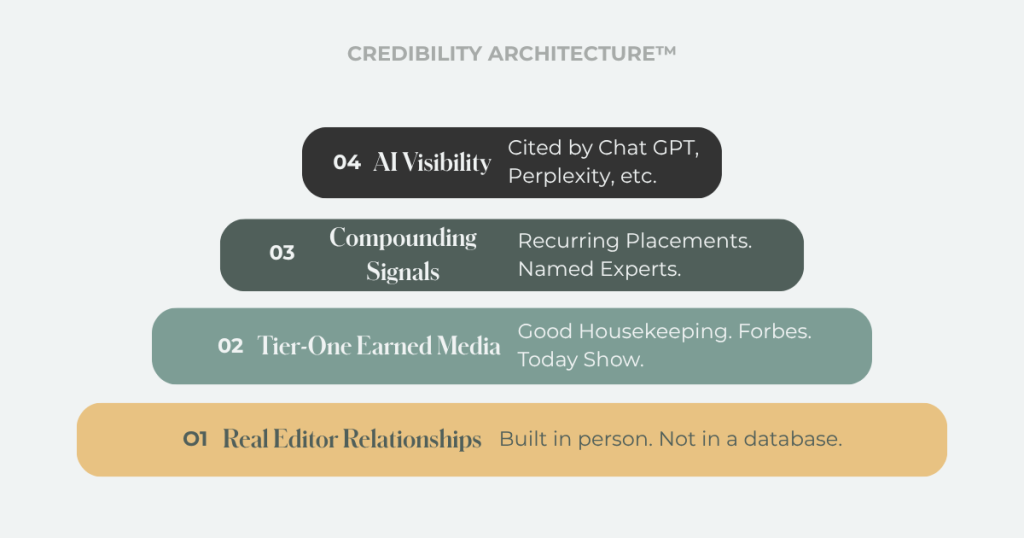
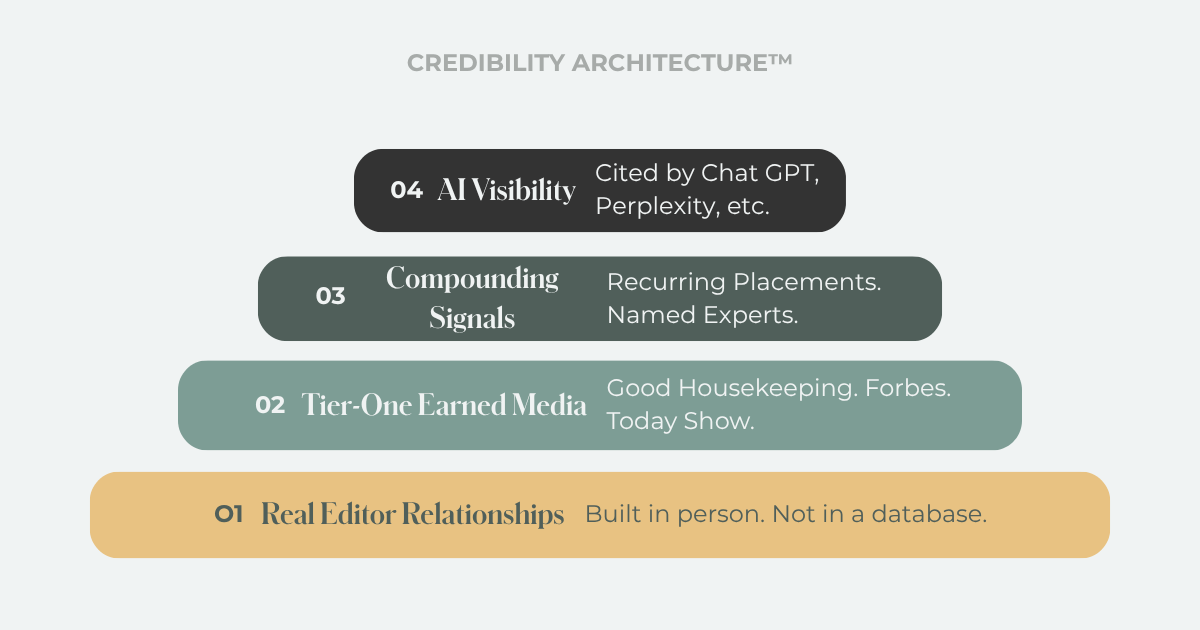
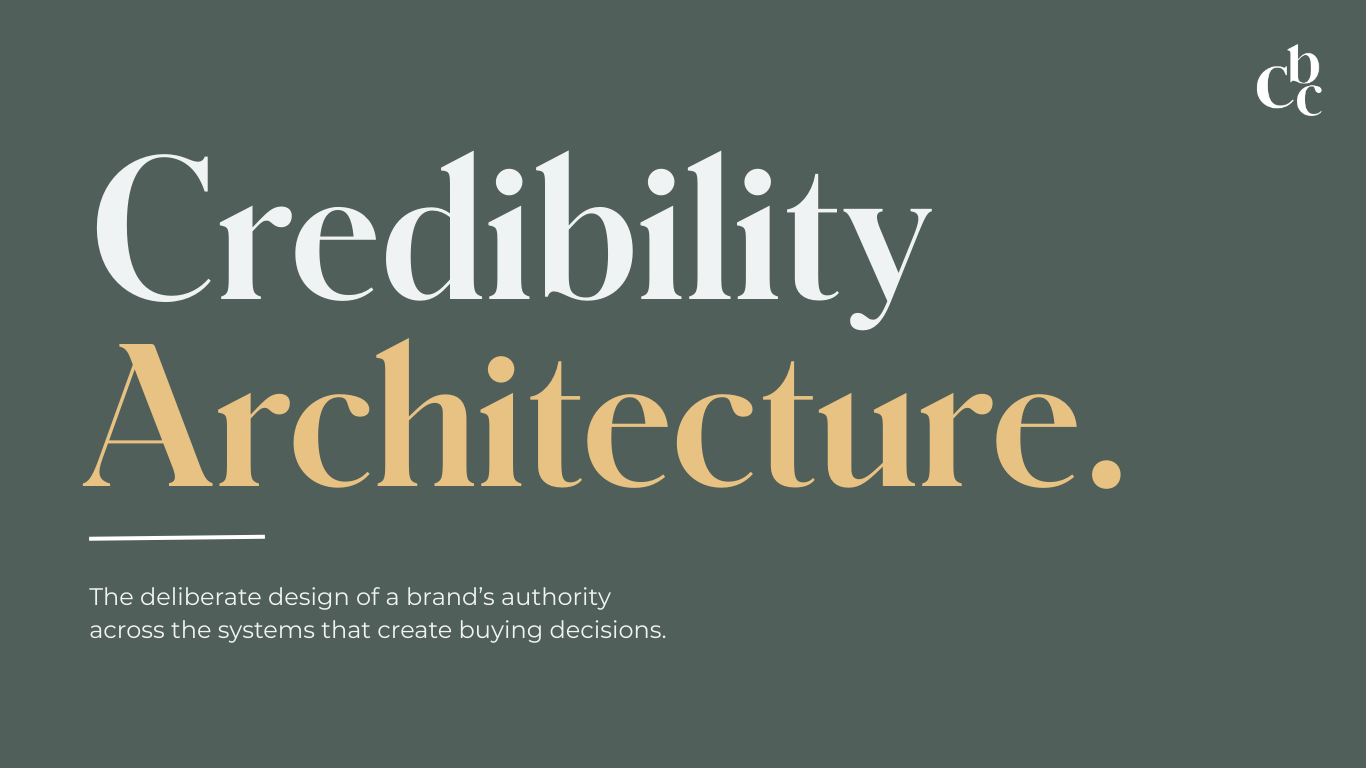
So when a prospect asks us about AI visibility, we don’t sell them a new program from scratch. We tell them we’re going to get them coverage in the outlets AI engines already trust, from the editors who already trust us. That’s what we mean by Credibility Architecture™: the deliberate layering of signals (coverage, quotes, recurring placements, named expert sourcing) that build trust with both human and machine audiences. The architecture only works if a publicist can actually get a reporter to engage. Which is where trust and personal relationships come back in. Making a human connection is the step that is vitally missing from most PR pros’ daily practice.
What brand leaders should do about it this quarter
Three moves any CMO or comms lead can make right now, whether they have an agency or run their program in-house.
Pick fewer reporters and go deeper. Choose the 15 or 20 journalists who actually matter for your category and invest in being genuinely useful to them over the next year. Not 15 pitches. 15 relationships.
Send the second email. Most outreach fails because publicists never follow up after the first silence. Trust usually gets built in the second, third, and fifth interaction, not the first. And if you believe in your story, as you should, don’t be afraid to make a call on occasion.
Weight your measurement toward coverage that compounds. A placement in a top-tier outlet is worth more in the AI era than it was five years ago, because the AI engines cite top-tier media sources disproportionately. If your reporting still treats every impression as equal, your reporting is behind.
None of this is a new idea. What’s new is the upside. The brands that win the next five years will be the ones whose PR partners can talk directly to a reporter. Everyone else is going to be fighting the same spam filters as the bots and losing.
Questions we hear a lot
How do I get my brand to show up in ChatGPT answers? Earned media, almost always. The AI engines weight coverage from trusted journalistic publications more heavily than almost any other signal. If your brand is getting written about in Bon Appétit, Good Morning America, or Parents, it is feeding the same models consumers ask for recommendations. If it is not, you are invisible, and no amount of website SEO will close the gap. The fastest path to AI visibility runs through the editors who have shaped consumer opinion for the last 25 years.
Is traditional media relations still worth the investment if AI is changing how consumers discover brands? More than ever. The publications AI engines cite most are the same publications our team has been placing stories in for 25 years. Strong media relations is now also the strongest AI visibility strategy a brand can run.
What should I look for in a consumer PR agency in 2026? Three things. Real editor relationships (ask any agency you are evaluating to name the top editors they are actually on a first-name basis with and watch how they answer). A measurable view of how their work shows up in AI-driven discovery, not just press clip counts. And a full earned media program across media relations, influencer, thought leadership, and measurement, rather than a single-service shop pretending to be bigger than it is. The agencies worth hiring can hold all three in the same conversation without flinching.
Why can’t AI-written pitches replace relationship-based outreach? Journalists can tell. More importantly, AI pitches all sound alike now, so reporters filter them out as a group. The publicists who still get reads are the ones whose names the reporter already recognizes. AI is a great tool for research, context and even finding reporters. It’s just not a replacement for real relationships.
What makes a CBC House Program different from a press preview or desksiders? Desksiders tend to be less personal, rushed and void of experience. A House Program is designed around what editors want to learn and who they want to meet. The editor’s experience is the organizing principle, not ours.
What is Credibility Architecture™? It’s CBC’s framework for building the earned media signals that make a brand visible and trusted in both human and AI-driven discovery. It combines traditional media relations, AI citation tracking, and coverage mix analysis in one integrated program.
About the Author

Len Cercone, Founder & CEO, CBC PR | PR & AI visibility expert. Building earned-first campaigns that influence audiences & fuel growth.
Sources
Related reading on CBC
Last updated: April 11, 2026